
History
The FJ25: The Land Cruiser Everyone Forgot
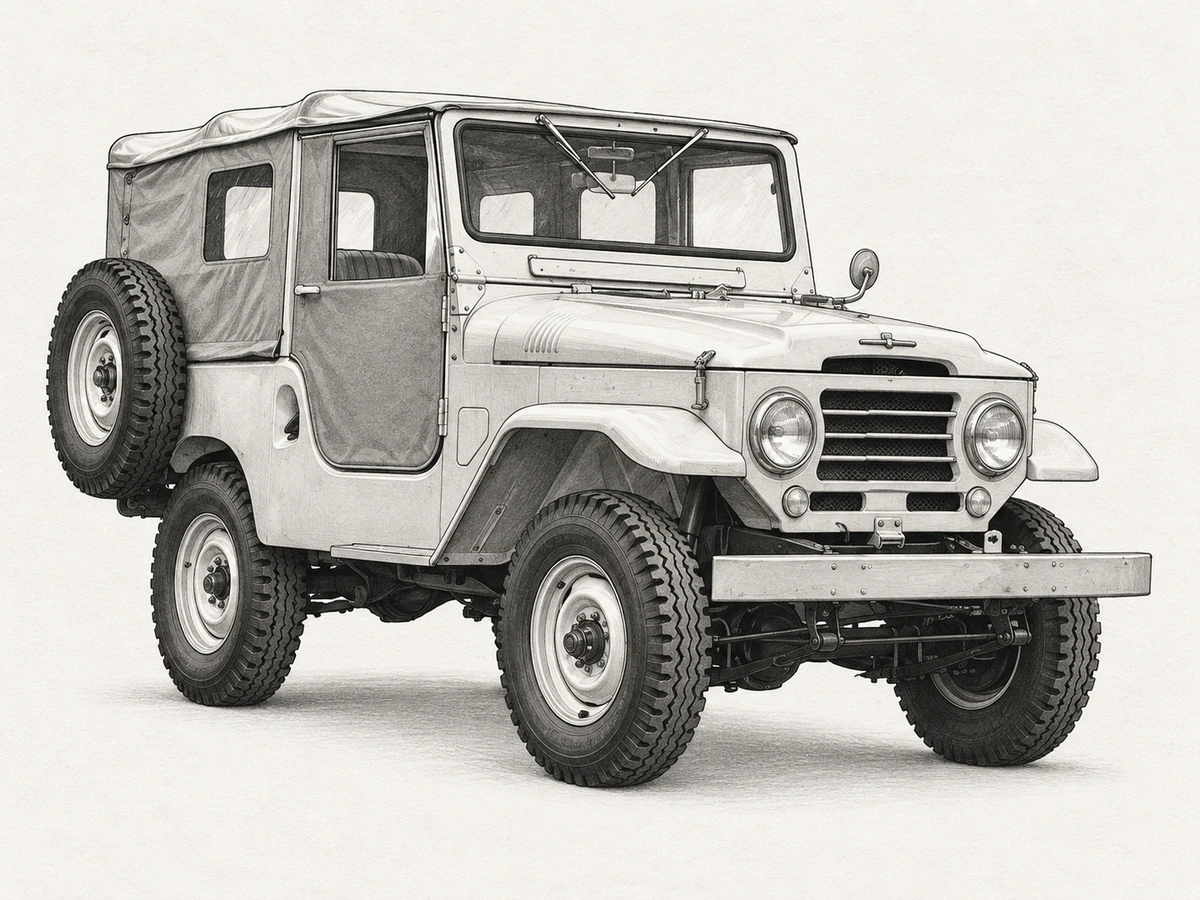
Most people think the 40 Series was the first Land Cruiser.
Yes and no.
The FJ40 that arrived in 1960 is the one everybody recognises: round headlights, flat wings, upright bodywork and the shape that eventually became shorthand for Land Cruiser itself.
But five years earlier, Toyota was already building and exporting a Land Cruiser that had begun doing the hard work of establishing the name.
The FJ25.
It is one of the most important Land Cruisers that hardly anybody talks about.
From military truck to something civilians could actually use
The story starts with the original Toyota BJ.
Developed in the early 1950s after Toyota was asked to produce a rugged four-wheel-drive vehicle, the BJ proved the basic idea worked. It was tough, simple and capable.
But it was still very much a working machine.
By 1955, Toyota was ready for the next step.
The new 20 Series Land Cruiser was designed to take the BJ formula and make it more suitable for civilian customers and overseas markets.
The basic character remained: a separate chassis, live axles, leaf springs, four-wheel drive and straight-six power. But the vehicle became a little more civilised.
The engine was positioned further forward to create more cabin space, the suspension was softened, and Toyota offered several body styles and wheelbases.
This was no longer simply a vehicle for police or government use. It could be sold to farmers, construction companies, utility operators and anybody else whose working day continued after the road stopped.
Meet the FJ25
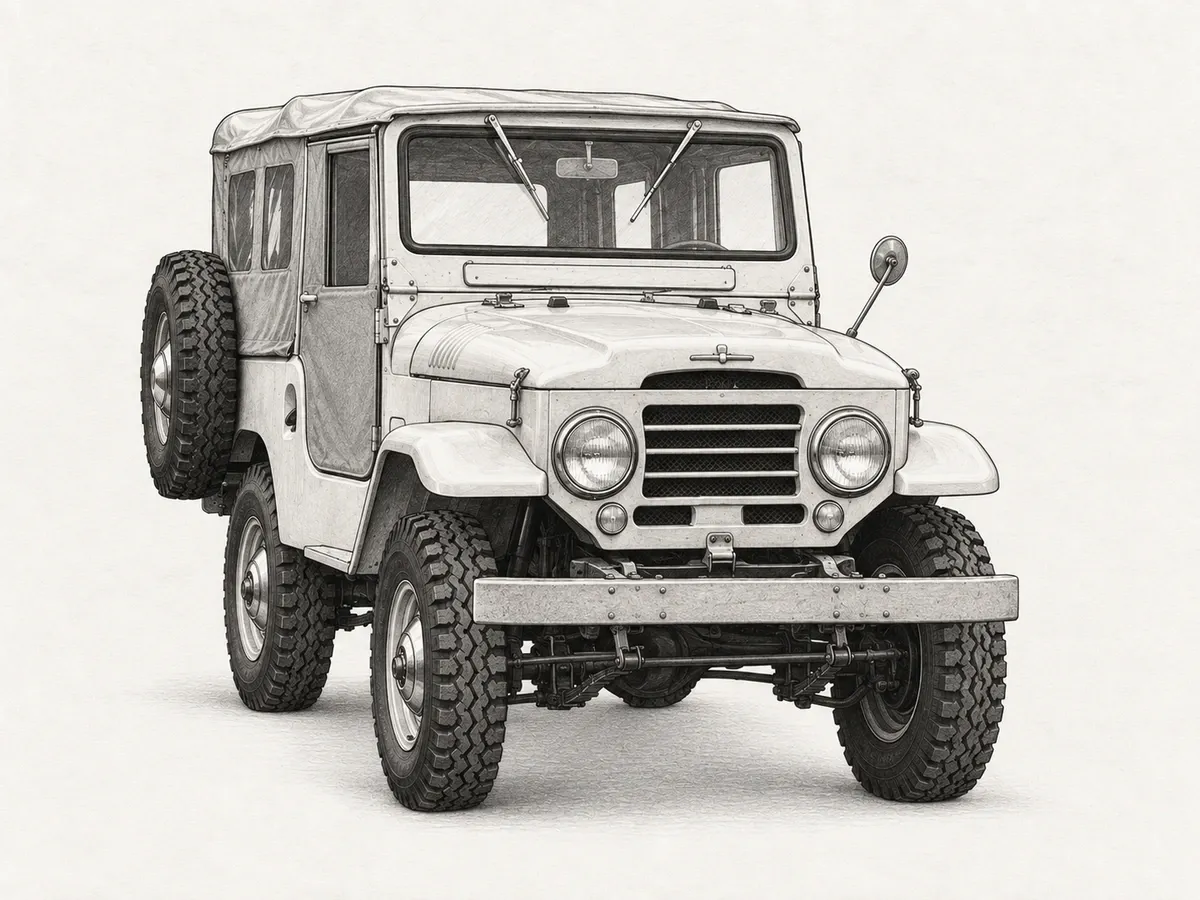
Among the short-wheelbase versions of the 20 Series was the FJ25.
Early 20 Series Land Cruisers appeared during Toyota’s transition from the older 3.4-litre B engine to the larger 3.9-litre F-series six-cylinder, which soon became the engine most closely associated with the model.
It was not sophisticated, and that was part of the appeal.
The mechanical layout was conventional and robust: a manual gearbox, four-wheel drive, live axles and leaf springs. Very little existed purely for comfort. Everything had a job.
Increasingly, those jobs were happening outside Japan.
This is where the Land Cruiser became international
The FJ25 matters because it appeared at exactly the point when Toyota started looking seriously beyond its domestic market.
The company discovered that a tough Japanese 4x4 could find customers in countries where vehicles were expected to work hard, travel enormous distances and survive far away from a dealership.
Two countries in particular helped shape what happened next: Brazil and Australia.
Brazil: Toyota’s first overseas production
Toyota established its Brazilian operation in 1958, its first production base outside Japan. Land Cruiser production followed in 1959.
That gives the early Land Cruiser a significant place in Toyota history. Before Corolla factories appeared all over the world, and before Toyota became one of the largest car manufacturers on earth, the Land Cruiser was among the vehicles leading the company’s expansion beyond Japan.
The Brazilian version evolved over time, eventually using locally sourced diesel engines and becoming the Toyota Bandeirante. What had begun as a Japanese utility vehicle became a Brazilian institution that would remain in production for decades.
The FJ25 had helped establish the template.
Australia: where Toyota learned an important lesson
The Australian story may be even more significant.
In the late 1950s, construction company Thiess was working on the enormous Snowy Mountains Hydro-Electric Scheme. The terrain was brutal: steep tracks, mud, snow, rock and long distances put vehicles under serious pressure.
Land Cruisers were brought in for the project, including early FJ25s. They did not arrive flawless. The vehicles suffered problems, and that is what makes the story interesting.
Toyota did not simply blame the conditions and walk away. Engineers were sent from Japan to work alongside crews in the field, study failures and understand exactly what was breaking. Components were examined, parts were redesigned and the vehicles improved.
It was an early demonstration of something that would later become deeply associated with Toyota: learn from the problem, fix it, and make the next vehicle better.
The relationship with Thiess grew, and in 1959 the company became Toyota’s first Australian distributor. The Land Cruiser had helped Toyota get its foot in the door of a market that would eventually become one of its strongest anywhere in the world.
Then the FJ40 arrived
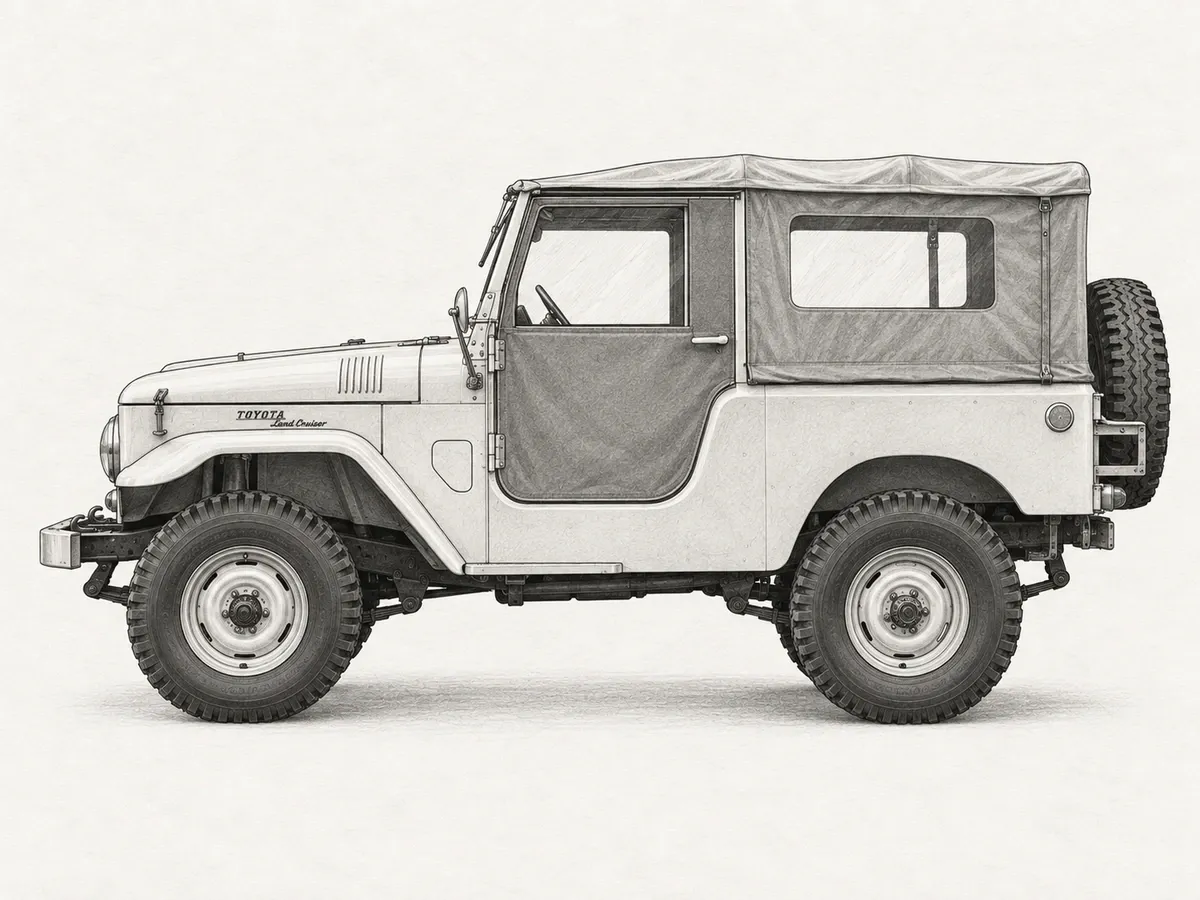
In 1960, Toyota introduced the 40 Series, and the FJ25 began disappearing from the story.
The new model was better resolved, produced in much larger numbers and remained in production for decades. Its shape became iconic. Collectors wanted it, restorers loved it, and eventually even people who knew very little about Land Cruisers recognised an FJ40 when they saw one.
The FJ25 never achieved the same cultural status.
But the FJ40 did not start with a blank sheet of paper. The basic philosophy had already been tested: simple engineering, strong engines, live axles, rugged construction, easy repair and, most importantly, the belief that a Toyota should be able to operate almost anywhere in the world.
The 20 Series had already been proving that on farms, construction sites, police duties and difficult terrain across several continents.
The Land Cruiser before the legend
That is why the FJ25 deserves more attention.
It sits between two better-known chapters of Land Cruiser history.
The BJ came first and created the idea.
The FJ40 came later and became the icon.
The FJ25 was the vehicle in between: the one that took the Land Cruiser beyond Japan, helped Toyota begin manufacturing overseas, helped establish the company in Australia, and spent five years proving the formula worked before the famous shape arrived.
The FJ40 became the legend.
The FJ25 helped make the legend possible.
Sources
- Toyota Global — 75 Years of Toyota: Development of four-wheel-drive vehicles such as the Land Cruiser
- Toyota Global — Land Cruiser history and 20 Series evolution
- Toyota do Brasil — Toyota history in Brazil
- Toyota Australia — Land Cruiser history in Australia
- Snowy Hydro — historical material on the Snowy Mountains Scheme