
History
Was the 80 Series Peak Land Cruiser?
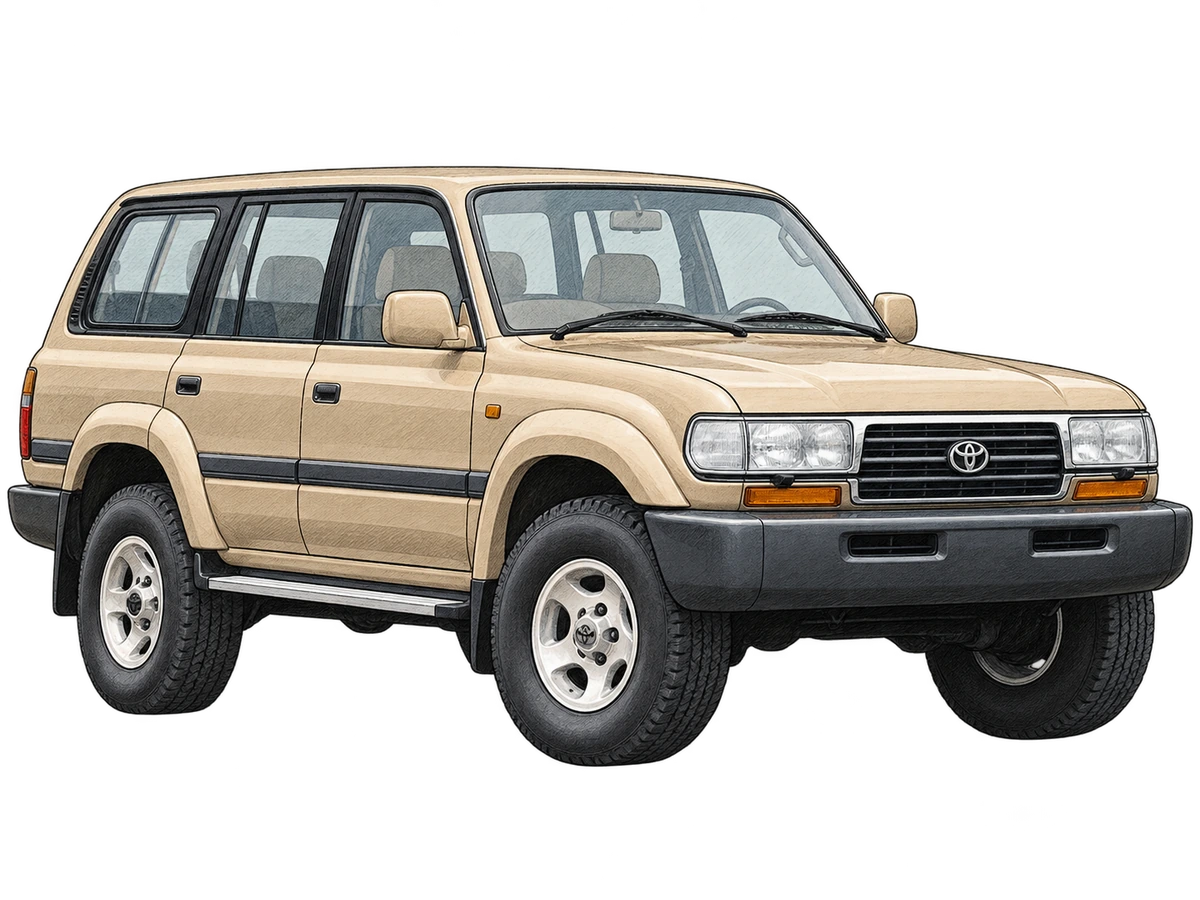
When Toyota developed the Land Cruiser 300, chief engineer Takami Yokoo looked back beyond the outgoing 200 Series. “We actually used the LandCruiser 80 as a guidepost,” he said in 2021. In his view, the 80 remained the benchmark for rough-road performance, even three decades after its debut.
That’s a striking thing for a chief engineer to say about his own company’s newest flagship. It’s one thing for enthusiasts to argue the 80 Series was the sweet spot — forums have been doing that for years — but it’s another for the person responsible for the latest, most technologically advanced Land Cruiser ever built to admit, on record, that the target he was chasing was set three decades earlier. So it’s worth asking properly: did the 80 represent the point where the Land Cruiser formula was at its best?
What the 80 actually changed
The 80 debuted in Japan in 1989 as a genuine departure from the 60 Series it replaced, not a facelift with better trim. The 60, introduced in 1980, rode on leaf springs at both ends and stuck with part-time four-wheel drive, a formula carried over more or less intact from the utilitarian 40 Series. The 80 swapped those leaf springs for coil springs front and rear. Depending on the version, buyers could have full-time four-wheel drive with a lockable centre differential, and Toyota offered electronically operated front and rear differential locks on some models from the outset.
It wasn’t a flawless debut. Early 80s in Australia suffered enough body roll that owners nicknamed it the “LandCruiser Lurch”, alongside some suspension damper and engine issues that Toyota spent the next couple of years quietly fixing through running changes. That’s worth remembering before anyone gets too misty-eyed: the 80 wasn’t handed down complete. It was refined into the vehicle people now remember fondly.
Once sorted, though, it did something no previous Land Cruiser had managed. Octane magazine’s assessment of the J80 calls it the first Land Cruiser genuinely to trouble a Range Rover buyer’s shortlist. Higher trims could make a credible luxury case, with a more car-like dashboard and equipment that would have seemed indulgent on a 60. Underneath, though, it kept the parts that mattered to people who used these things hard: a separate ladder chassis and solid axles front and rear, now coil-sprung instead of leaf-sprung. Manual gearboxes remained available. High-mileage diesel 80s became a point of pride in enthusiast circles rather than an automatic warning sign.
That combination — meaningfully more comfortable without giving up the mechanical layout that made a Land Cruiser easy to fix at the side of a track — is the whole case for the 80 as the sweet spot. It sat exactly on the hinge between the old commercial lineage and the modern luxury one, and for a few years it managed both jobs at once.
Two versions of the formula
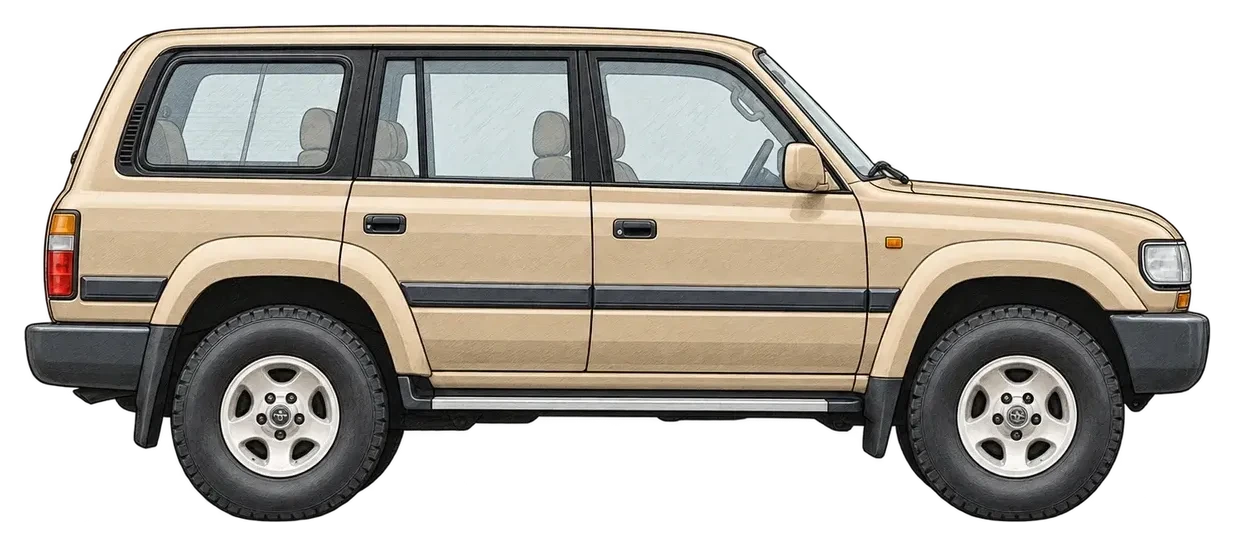
The 100 Series, launched in Japan in January 1998, is where that hinge starts to swing decisively one way. Its biggest change was mechanical rather than cosmetic: the 100 received independent front suspension, using torsion bars and double wishbones, in place of the 80’s solid front axle. Rack-and-pinion steering replaced the old recirculating-ball setup. For most buyers, this was an improvement in on-road manners, and Toyota added a factory V8 petrol option in the process.
The interesting thing is what Toyota kept alongside the 100. It continued building a parallel model, badged the Land Cruiser 105, with a solid front axle riding on the 80’s coil-sprung layout. In Australia, the IFS-equipped 100 and solid-axle 105 were sold side by side. Buyers there were still being offered a version that retained the 80’s basic suspension architecture.
By the time the 200 Series arrived in 2007, that parallel-model arrangement was gone. Independent front suspension became universal across the range, the vehicle grew larger and heavier, and Toyota layered in electronic aids like the Kinetic Dynamic Suspension System to keep off-road articulation credible without a beam axle. The 200 brought more power, safety, comfort and technology than the 80 ever could. By the 200, luxury was no longer something creeping into the Land Cruiser. It had become part of the brief.
What stayed the same, and what that tells you
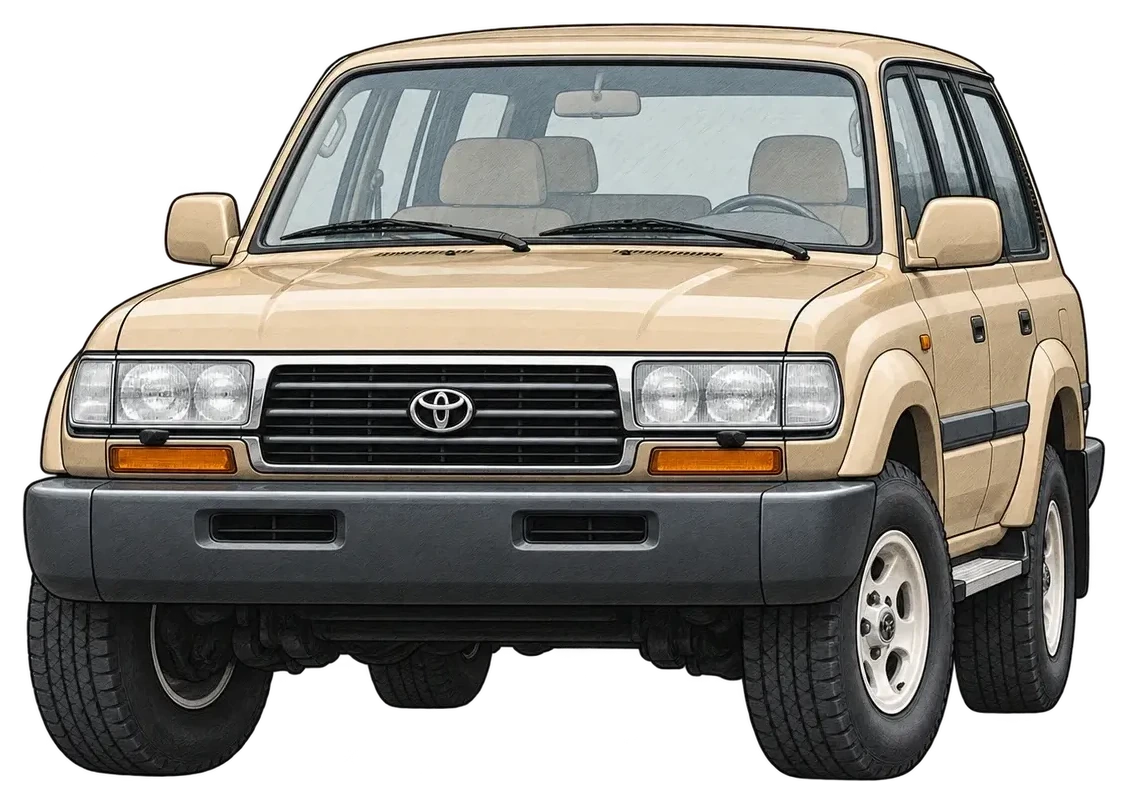
Here’s the detail that makes Yokoo’s comment more than a soundbite. Toyota retained a 2,850mm wheelbase through the 80, 100, 200 and 300 Series wagons. The reasoning is practical rather than mystical: a longer wheelbase helps straight-line stability, but can make it harder to clear obstacles off-road. Keeping that dimension preserved one useful part of the 80’s balance while other aspects of the vehicle changed.
That dimension is one part of the 80 Series’ lasting influence. It is a practical choice that later generations kept even as they gained weight, power, luxury and electronic assistance.
So did later Land Cruisers become better vehicles? In ways that matter, they did. Toyota says the 300’s redesign cut body weight by about 200kg, and it rides on a new body-on-frame platform. The 100, 200 and 300 each improved the formula, bringing advances in comfort, safety and technology. None of that makes the 80 the last proper Land Cruiser.
But the 80 arrived at a peculiar moment in Land Cruiser history. It had gained enough refinement to become genuinely comfortable while retaining the mechanical layout of what came before: coil-sprung comfort you could live with daily, with solid axles and a separate chassis underneath.
Perhaps that’s why the argument about the 80 never really goes away. Three decades after its debut, the rough-road guidepost Yokoo talked about when discussing the 300 was still the 80.
Maybe “peak Land Cruiser” isn’t about which generation was best. Maybe it’s about which generation got the mixture just right.
Sources
- Toyota — Land Cruiser 80 Series launch release (1989)
- CarExpert — How the 80 Series inspired the LandCruiser 300 (2021)
- 4x4 Australia — LandCruiser 80 Series retrospective
- Octane — Toyota Land Cruiser J80 buying guide
- Toyota — Land Cruiser 100 Series launch release (1998)
- Toyota — Land Cruiser station-wagon history
- Toyota — Land Cruiser 300 Series launch release (2021)